news
| Nov 18, 2026 | Our paper “RoboStriker: Latent-Space Strategic Games for Autonomous Humanoid Boxing” has been accepted for publication in IEEE Robotics and Automation Letters (RA-L). Yang Li is a co-corresponding author. 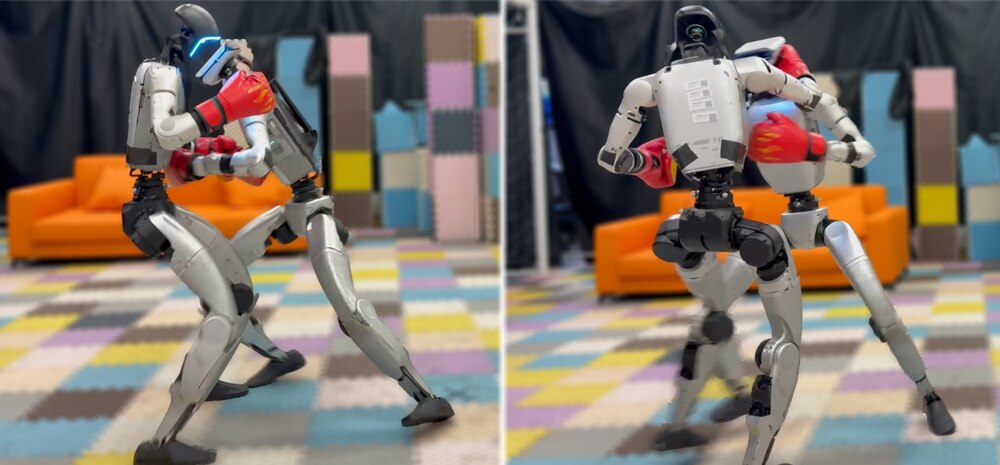 |
|---|---|
| Nov 03, 2026 | Our paper, “SOMA: Safe Open-ended Multi Agent Reinforcement Learning for Soft Landing of Launch Vehicles” (Co-first Author), has been accepted by IEEE Transactions on Aerospace and Electronic Systems (TAES). Many thanks to all collaborators! |
| Oct 24, 2026 | Join us at RLChina 2026 for two events on embodied intelligence and robot learning! November 8 (afternoon) · Forum 14: 具身智能与机器人学习 (Embodied Intelligence and Robot Learning) Co-chairs: 张伟楠 (Weinan Zhang) and 李阳 (Yang Li), both from Shanghai Jiao Tong University. Speakers: 郭浩宇 (上海人工智能实验室), 石野 (上海科技大学、瞬适科技), 赵乾佑 (Sharpa), 班雨彤 (上海交通大学), 李永露 (上海交通大学), and 陈立 (源策未来 / Archon Robotics). November 11 (afternoon) · RLChina Tutorial: 具身智能关键技术 (Key Technologies in Embodied Intelligence) Host: 李阳 (Yang Li). Three lectures cover embodied AI foundations and the frontiers and practice of Physical Intelligence Harness:
|
| Oct 15, 2026 | New paper in Progress in Aerospace Sciences: “Liquid-propellant rocket engine health monitoring technologies: A survey, insights, and prospects”. Authors: Jianjun Wu, Yuwei Liu, Yuqiang Cheng, Shuming Yang, and Yang Li. From a Physical AI perspective, this survey reframes liquid-propellant rocket-engine health monitoring as a physics-grounded, closed-loop intelligence problem—linking multimodal sensing, fault diagnosis, prognostics, and autonomous decision-making to make safety-critical propulsion systems more self-aware and resilient. Progress in Aerospace Sciences is Elsevier’s invitation-only journal devoted exclusively to critical reviews across aeronautics and astronautics—including AI, machine learning, and onboard autonomy—and currently reports a CiteScore of 34.8 and an Impact Factor of 16.2. |
| Sep 28, 2026 | Two papers have been accepted at NeurIPS 2026: “Context Value Informed In-Context Reinforcement Learning” (Corresponding Author) and “Axiomatic Reinforcement Learning for Open Multi-Agent Systems from Shapley Axioms” (Corresponding Author). Many thanks to all collaborators! |
| Sep 18, 2026 | I am serving as an Area Chair for ICLR 2027. |
| Sep 18, 2026 | Our paper (co-first author), “Embodied Science Agents: Making Embodied Experimental Design Learnable,” has been accepted as an oral presentation at DAI 2026. |
| Aug 06, 2026 | New paper: “SkillTV-Bench: Benchmarking How Well Judges Perform on Skill-Augmented Agentic Execution” (Corresponding Author). SkillTV-Bench evaluates whether LLM- and agent-based judges can verify complete skill-augmented agent executions, while SkillTV-Evolve automatically refines a reusable JudgeSkill for more reliable trajectory verification and rollout selection. arXiv · Code |
| Aug 03, 2026 | Two new papers are available. “CoNav-UAV” (Corresponding Author) models cooperative dual-altitude aerial navigation as a Stackelberg game, coupling a high-altitude VLM leader with a low-altitude control follower (arXiv). “DF³” (Corresponding Author) forecasts future states entirely within a frozen vision encoder, removing heavy decoders for efficient autonomous navigation (arXiv). |
| Jul 24, 2026 | New preprint: “InternLab: A Governed Network of Physically Intelligent Autonomous Laboratories for Open-world Scientific Discovery” (First Author). InternLab proposes a governed network that connects physically intelligent autonomous laboratories, enabling coordinated and accountable open-world scientific discovery across distributed physical labs. DOI |
| Jul 06, 2026 | New paper: “Multi-Robot Open Adaptive Teaming Across Unseen Environments, Partners, and Scales” (First Author). We formulate open adaptive multi-robot teaming and introduce HOLA, enabling drone and quadruped teams to coordinate with unseen partners, in unseen environments, and at varying team scales, with zero-shot transfer to physical robots. arXiv |
| Jun 29, 2026 | New paper: “Clarus: Coordinating Autonomous Research Agents toward Web-Scale Scientific Collaboration.” Clarus turns autonomous research from a closed workflow into an open, auditable, attributable, and resource-aware collaboration network connecting agents, researchers, and physical laboratories. arXiv · Project |